
Central Kitsap Fire and Rescue Station 57 is a newly designed and built fire station that serves the Lake Symington, Lake Tahuya, Crosby, Holly, and surrounding Seabeck communities in Kitsap County, Washington. We recently photographed this state-of-the-art facility, a project by Rice Fergus Miller, the Berschauer Group, Inc, and Reid Middleton, Inc.

Central Kitsap Fire & Rescue Fire Station 57, Lake Symington, Washington.
“From ‘money’ shots to details, Doug has an excellent eye for capturing the essence of the projects we design. We don’t hesitate to pick up the phone and let Doug know when we have another project that needs to be photographed!”
Each architectural photography project requires meticulous planning to capture effectively and to communicate the essence of a building and to convey its design intent.
Here is a breakdown of the essential steps we take to ensure it’s success!.

This new station houses modern fire and rescue apparatus, providing enhanced capabilities for firefighting, emergency medical services, and other rescue operations.
Capturing the essence of a design isn't just about showing up with a camera. It's a collaborative journey that begins long before the shoot and continues long after. Let's take a look at the steps involved, from initial planning to the final polished image.
All the while we must be reminded that "‘the best photographs are born not in the camera, but in the mind’.
Understanding the Project and Client's Vision:
Initial Consultation: Begin with a thorough discussion with the client (architect, designer, or property owner) to understand their objectives, desired mood, and key features they want to highlight.
Review of Architectural Plans and Drawings: Study the building's blueprints, elevations, and site plans to get a comprehensive understanding of its layout, orientation, and design elements.
Define the Scope: Determine the specific areas of the building to be photographed (interior, exterior, or both), the number of images required, and any specific shots or angles desired.
Establish a Budget and Timeline: Discuss the project budget, including photography fees, travel expenses, and any additional costs (e.g., equipment rental, post-processing). Set a realistic timeline for the shoot and post-production work.

Well-equipped and designed kitchens include spaces for healthy meal preparation and social interactions.
Planning the Shoot:
Determine Optimal Time of Day: Consider the sun's position and its impact on the building's facades as it moves throughout the day. [Our goto app for this is The Photographer's Ephemeris} "Golden hour" (early morning or late afternoon) often provides the most flattering light. Dusk timing is critical!
Weather Considerations: Monitor weather forecasts and plan for potential contingencies (e.g., rescheduling due to rain or heavy overcast skies).
Equipment Selection: Choose appropriate lenses (wide-angle, telephoto, tilt-shift), camera bodies, tripods, and lighting equipment based on the project requirements.
Styling and Staging: If necessary, coordinate with stylists or assistants to prepare the building for the shoot, including furniture arrangement, cleaning, and prop placement.
“Doug has a terrific eye that further rewards our team by beautifully capturing our projects and the pride we have in the work we do and in the Districts we work for. Doug has a great process of discussing with the client and owner what images & features are most relevant and then works to photograph them in the best way. He also ensures that the fire station staff and equipment are available so that we can all see the public service in action, which is great since that’s what these stations are all about! We are honored to be working with Central Kitsap Fire and Rescue and Rice Fergus Miller in improving these stations and the public service and safety they provide.”

Hörmann doors are featured throughout the design emphasizing safety and innovation with a focus on durability.
“We thoroughly enjoyed collaborating with Hormann on this project. Their exceptional technical assistance during the design phase ensured seamless integration of their high-speed overhead doors with our architectural vision. Their expertise not only helped us achieve precise detailing but also gave us confidence in delivering a design that was efficient and reliable.”
Communication and Coordination:
Clear Communication: Maintain open communication with the client throughout the planning process, providing updates and addressing any concerns.
Schedule and Logistics: Finalize the shoot schedule, including arrival times, breaks, and any specific instructions for the on-site team.
Confirm Client Presence: Determine if the client or a representative will be present during the shoot to provide feedback and ensure their vision is being met.

Firefighters moving through common space towards apparatus bay responding to a call.
Post-Production and Delivery:
Image Selection and Editing: Carefully select the best images from the shoot and perform necessary post-processing, including color correction, perspective adjustments, and retouching.
Client Review: Provide the client with a selection of edited images for review and feedback.
Final Delivery: Deliver the final images in the agreed-upon format and resolution, ensuring they meet the client's specifications.

The Role of the Relaxing Room in Fire Station Design. A well-designed relaxing room is a vital sanctuary, providing stress reduction, mental recharge, and provides social connections.
Additional Considerations:
Safety: Prioritize safety during the shoot, especially when working at heights or in challenging environments.
Insurance: Ensure appropriate insurance coverage for equipment and personnel.
Copyright and Usage Rights: Clarify copyright ownership and usage rights for the photographs with the client.
By adhering to these steps we plan and execute each architectural photography project to capture the beauty and essence of a building while exceeding our client's expectations.

Drone view shows early morning training and the station in context to the beautiful surroundings.
Ultimately, for each photography project our aim is to illuminate the architect's vision, and to bring their creative concepts to life! Powerful photography helps architects communicate their design to clients, fostering a clear understanding and appreciation of the project!
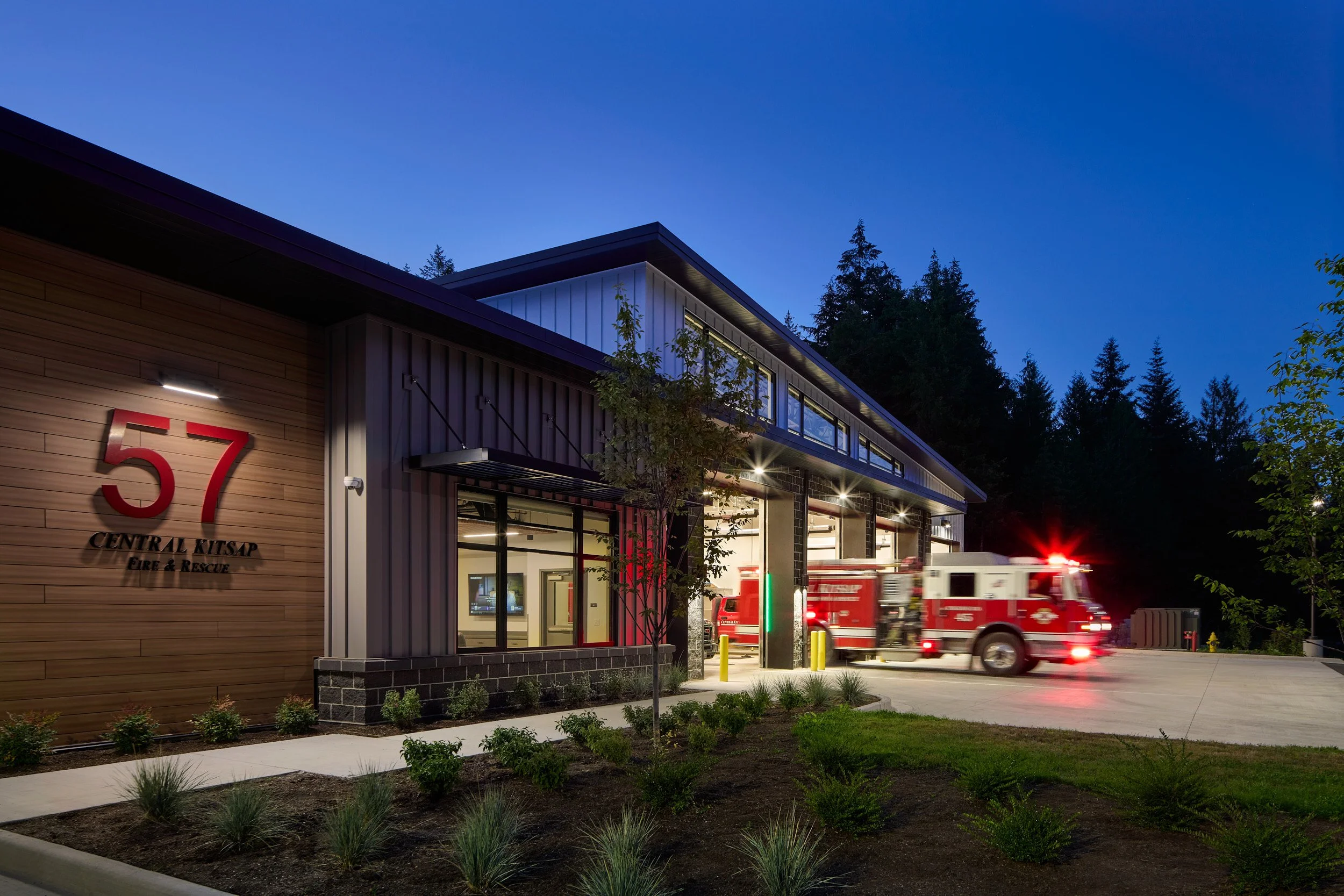
CKFR57’s strategic location is expected to significantly improve emergency response times for residents in the area.

Vertical detail showing the forms and surfaces used in the design of CKFR 57.

Incident mapping, resource tracking, and communications are essential for enabling virtual meetings and coordination with other departments during emergencies.

The station includes sleeping quarters which are essential for rest and privacy, especially during long shifts.

Exhaust Extraction Systems are designed to capture and remove diesel exhaust fumes from the apparatus bay. They typically use powerful fans to vent the exhaust outside the station.


Dusk image features the engines backed into the apparatus bays as they return from an evening call.
“FROM PROGRAM TO PLACE... an architect’s vision comes to life. My role is to illuminate that vision, capturing the soul of their design through the art of photography. This process, from meticulous pre-production planning to the final post-production touches, is all about understanding and showcasing their unique perspective. It’s about translating their dreams into compelling imagery that resonates with their clients and the world.”